

Coming up with new recipe ideas and blog topics sounds easy until you have been publishing consistently for months or years.
Eventually, most food bloggers reach the same point. You start wondering what to publish next, which recipes people are actually searching for, what food trends are gaining momentum, and which questions your audience wants answered.
That is where content discovery tools can help.
The best content discovery tools for food bloggers can uncover trending recipes, seasonal searches, popular questions, emerging food trends, successful competitor content, and conversations that are already attracting attention online.
Instead of guessing what to publish, you can use real search behavior, audience interests, and current trends to build a stronger content calendar and make better decisions about what deserves your time.
Below, we will look at some of the best content discovery tools food bloggers can use to generate recipe ideas, identify trends, research potential topics, and plan future content.
What Are Content Discovery Tools?
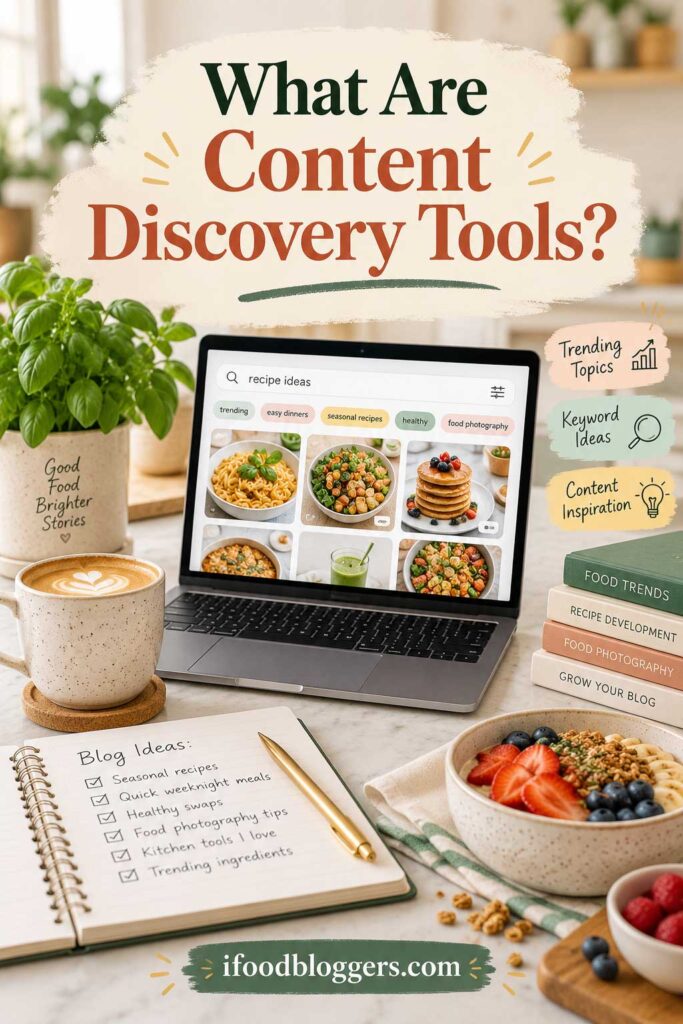
Content discovery tools are platforms that help you uncover topics, questions, keywords, trends, articles, and conversations people are already interested in.
Different tools gather information in different ways. Some analyze Google searches, while others monitor social media, news websites, forums, Pinterest activity, RSS feeds, or emerging online trends.
For food bloggers, that can mean discovering seasonal recipe opportunities, popular ingredients, frequently asked cooking questions, new appliances and techniques, dietary trends, holiday content ideas, Pinterest searches, competitor topics, emerging food products, and useful long-tail keywords.
The goal is not to use every tool available. In most cases, combining two or three reliable discovery tools is enough to generate far more useful content ideas than you can realistically publish.
Affiliate Disclosure: Some links in this article may be affiliate links. If you make a purchase or sign up through one of these links, iFoodBloggers may earn a commission at no extra cost to you.
1. Google Trends
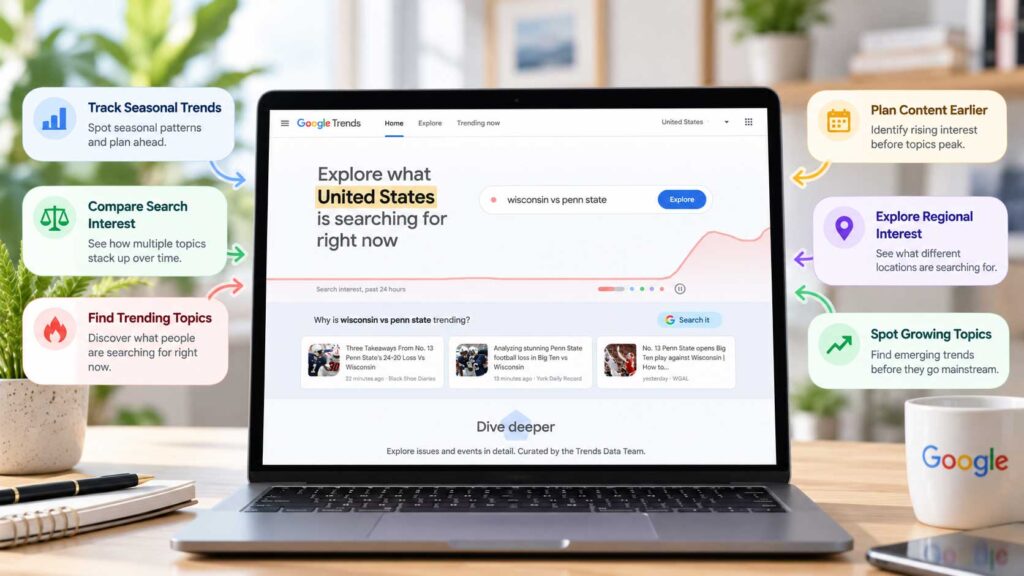
Google Trends should be one of the first tools food bloggers check when researching new recipe ideas and planning future content.
The platform shows how search interest changes over time, making it particularly useful for understanding seasonality and spotting topics that may be gaining or losing popularity.
For example, you can compare searches such as air fryer chicken, pumpkin bread, overnight oats, protein smoothies, Christmas cookies, and grilling recipes to see how interest changes throughout the year.
This can quickly show whether a topic is growing, declining, remaining relatively steady, or following a predictable seasonal pattern.
Google Trends also includes a Trending Now section that highlights searches experiencing sudden increases in interest. While many of those trends may not be relevant to a food blog, occasionally they can reveal ingredients, recipes, food products, or cultural moments worth exploring.
Why Google Trends Is Useful for Food Bloggers
Food content is highly seasonal, which makes timing especially important.
Soup recipes often begin attracting more interest as the weather cools, while grilling recipes tend to perform better during warmer months. Pumpkin recipes usually rise in late summer and fall, and searches for holiday cookies can begin increasing weeks before Christmas.
Google Trends helps you see these patterns before demand reaches its peak. That can help you decide when to publish a new recipe, refresh an older article, create Pinterest content, or begin promoting seasonal posts again.
It is also useful for comparing similar ideas before investing time in a new article.
Food Blogging Tip
Instead of researching only one keyword, compare several closely related recipe ideas.
For example, if you are planning high-protein breakfast content, you could compare protein pancakes, protein waffles, protein muffins, and protein oatmeal.
The comparison may show that one topic attracts steady interest throughout the year while another spikes during a particular season. That makes it easier to decide which recipe deserves priority and when it makes the most sense to publish it.
Google Trends should not replace traditional keyword research because it does not provide the same search-volume and competition data as dedicated SEO tools. However, it is extremely useful for understanding when people become interested in a topic and how that interest changes over time.
Google Trends works even better when you combine it with free keyword research tools for food bloggers to check search demand and find related keyword opportunities.
Website: Google Trends
2. Pinterest Trends
Pinterest Trends is one of the most useful content discovery tools for food bloggers because recipes, meal ideas, baking, entertaining, and seasonal food content are such a natural fit for Pinterest.
The tool helps you explore what people are searching for and how interest changes over time. For a food blogger, that can reveal growing interest in seasonal recipes, holiday food, meal-prep ideas, healthy recipes, party dishes, baking, drinks, kitchen organization, and even visual styles related to food photography.
Pinterest is especially valuable because users often search while planning something they want to make, buy, organize, or save for later. That gives food bloggers a chance to spot demand before it reaches its peak.
Pinterest also provides trend and predictive insights that can help you plan content weeks or even months ahead, rather than noticing a seasonal idea only after everyone else has started publishing it.
Why Pinterest Trends Matters for Food Bloggers
Timing matters a lot on Pinterest.
If searches for strawberry desserts begin increasing several weeks before summer, that may be the right time to publish a new recipe, refresh an older post, or create fresh Pins around that topic.
The same applies to holiday cookies, fall baking, grilling recipes, summer drinks, back-to-school lunches, and other highly seasonal food topics. Waiting until the season is already at its peak can mean missing part of the opportunity.
Pinterest Trends can also help you compare similar ideas before deciding what to prioritize. For example, you might compare searches for summer pasta salad, cucumber salad, watermelon salad, and grilled corn to see which topics are gaining momentum.
For food bloggers already getting traffic from Pinterest, this can become an especially useful planning tool because it combines topic discovery with real platform behavior.
Website: Pinterest Trends

3. BuzzSumo
BuzzSumo is a powerful content research platform for finding articles, topics, questions, and discussions that are already getting attention online.
For food bloggers, it can be especially useful when you want to understand what kinds of content are performing well around a specific topic. You can research popular articles, related subjects, trending discussions, audience questions, and content that has attracted strong engagement.
For example, you might search for air fryer recipes and then look at the types of headlines, recipe angles, questions, and supporting topics appearing around that subject.
The goal is not to copy another publisher. Use the results to spot patterns, unanswered questions, and angles you may be able to cover more thoroughly for your own audience.
How Food Bloggers Can Use BuzzSumo
One of the best uses of BuzzSumo is competitor research.
You can study which articles from other food websites have attracted attention and look for patterns in the topics they cover. This may reveal recipe categories, seasonal themes, or content formats that deserve further research.
BuzzSumo can also help with headline inspiration and content-gap research. If you repeatedly see interest around a broad subject but notice that certain questions or recipe variations are poorly covered, that may point to a useful opportunity for your own site.
Its discovery and question research features can also surface discussions from forums and other online communities, which can help you understand what people are asking before you plan a new article.
BuzzSumo for Keyword and Trend Research
BuzzSumo also includes keyword and trend data that can provide additional context when evaluating a topic.
That makes it useful as part of a broader research process. You might first discover a topic in BuzzSumo, then verify search demand with your preferred keyword research tool and check seasonality with Google Trends before deciding whether the idea belongs in your content calendar.
If you are still building your research stack, our guide to the best tools for food bloggers covers additional SEO, analytics, content, and productivity tools.
For food bloggers managing multiple content channels, BuzzSumo can be useful for discovering ideas that may work not only as blog posts but also as Pinterest content, newsletters, and social media posts.
Website: BuzzSumo
4. AnswerThePublic
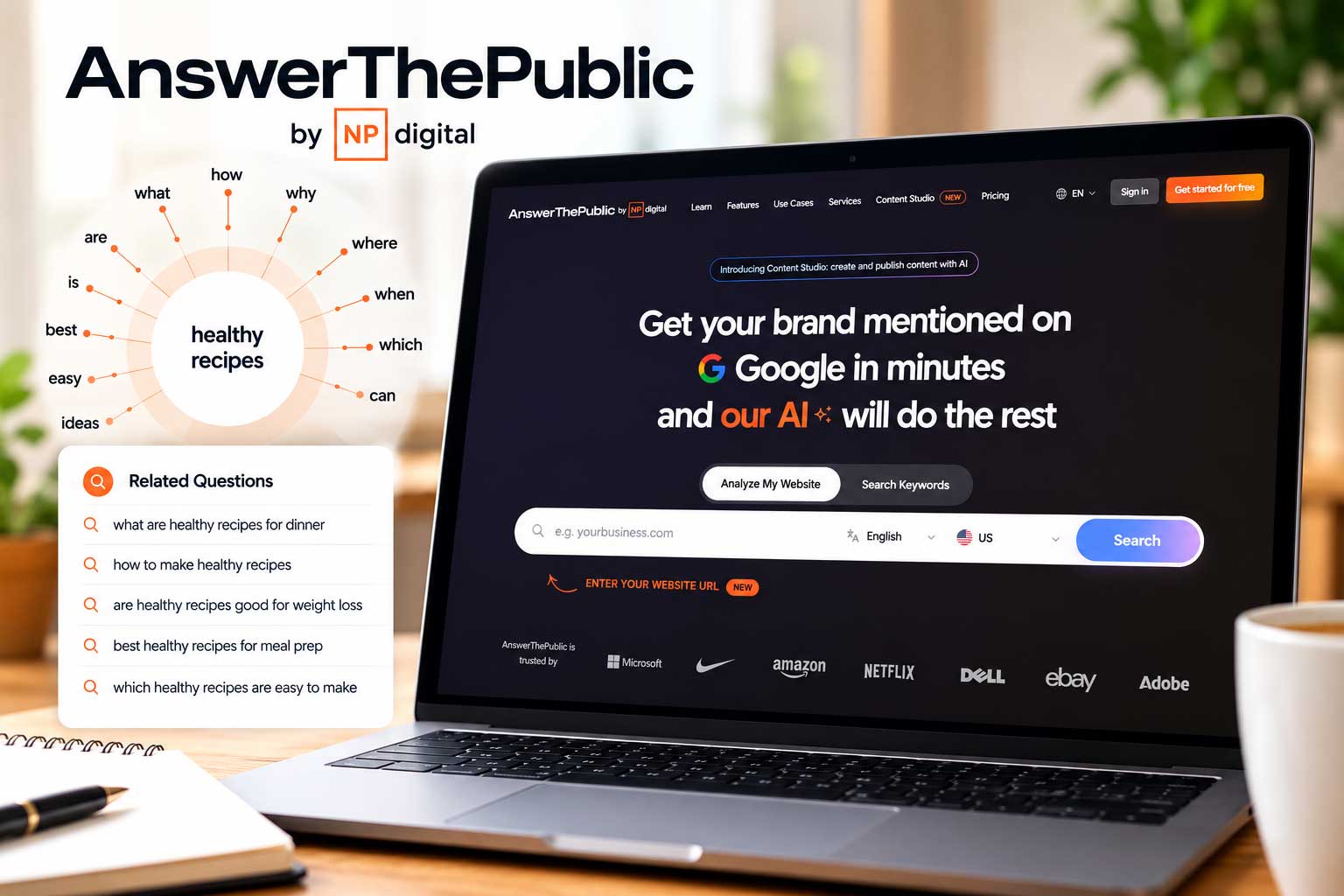
AnswerThePublic is especially useful when you already have a broad topic in mind but need help turning it into more specific content ideas.
Start with a simple seed phrase such as air fryer, sourdough, smoothies, or slow cooker. The platform then organizes related searches into categories such as questions, comparisons, prepositions, and other search variations.
For an air fryer topic, for example, you may uncover questions such as what can you cook in an air fryer, can you put foil in an air fryer, air fryer vs convection oven, or air fryer recipes for beginners.
These searches are useful because they show the language people actually use and often reveal questions that a broader recipe or guide may not answer clearly.
How Food Bloggers Can Use AnswerThePublic
A single broad topic can lead to several different content opportunities.
Some questions may deserve their own article, while others fit better inside an existing recipe, FAQ section, supporting guide, Pinterest Pin, or social post. The key is to look for patterns rather than treating every suggestion as a separate article idea.
For example, if several searches relate to making chicken thighs in an air fryer without breading, that may point to a clear content angle worth developing in more depth.
Start With Broad Seed Topics
AnswerThePublic usually works best when you begin with a short, broad phrase instead of a long sentence.
Topics such as meal prep, protein breakfast, cast iron, chicken thighs, smoothies, sourdough, and slow cooker can generate a wide range of related questions and comparisons.
For a deeper look at turning these questions into search opportunities, see our guide to the best free keyword research tools for food bloggers.
From there, you can identify which ideas match your niche, verify demand with a keyword research tool, and decide whether the topic should become a new post or strengthen an existing one.
Website: AnswerThePublic
5. Feedly
Feedly takes a different approach from tools focused mainly on search demand or social trends.
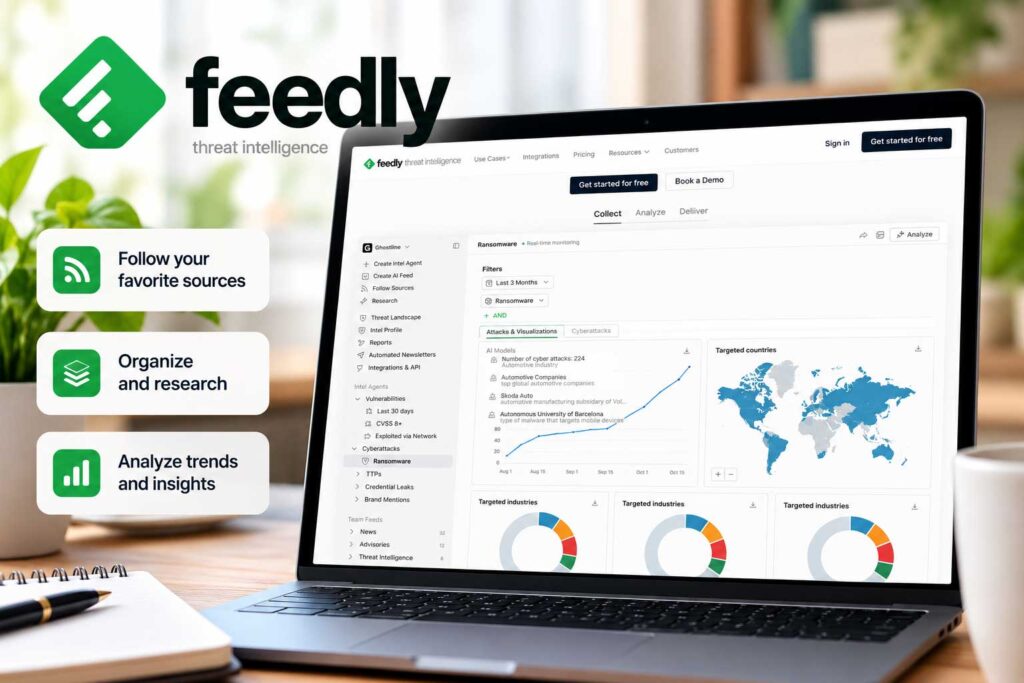
Instead of showing you keyword data, it helps you follow websites, publications, blogs, RSS feeds, and other information sources in one place. That makes it useful for building your own food-industry research dashboard.
A food blogger might use Feedly to follow recipe websites, food news publications, nutrition sources, restaurant trends, grocery products, kitchen equipment, and developments in food technology.
Instead of visiting dozens of websites individually, you can bring their latest content into organized feeds and scan everything from one dashboard.
Feedly also includes AI-powered features that can help surface relevant articles and make it easier to focus on the topics that matter most to you.
Best Way to Use Feedly
The biggest advantage of Feedly is organization.
You can create separate feeds around areas such as recipe inspiration, food industry news, nutrition trends, kitchen products, and competitors. This makes it much easier to keep research separated by purpose instead of saving everything into one long list of bookmarks.
For food bloggers who regularly monitor other publishers or industry news, Feedly can also help reveal patterns over time. You may notice several websites suddenly covering the same ingredient, appliance, restaurant trend, or cooking technique.
Seeing the same topic appear several times does not mean you should immediately write about it, but it is often a good reason to investigate further.
Feedly works best as an ongoing discovery tool rather than a traditional keyword research platform. Use it to stay aware of what is happening in your niche, then validate promising ideas with tools such as Google Trends or your preferred SEO platform.
Website: Feedly

6. Exploding Topics
Exploding Topics is useful when you want to discover subjects that may be gaining momentum before they become widely popular.
Instead of focusing only on established search terms, the platform tracks emerging topics across areas such as food, health, lifestyle, technology, and consumer products. For food bloggers, that can reveal growing interest in new ingredients, viral drinks, health-food trends, kitchen products, dietary movements, restaurant concepts, and developments in food technology.
The advantage is timing.
If a new ingredient or beverage is starting to attract attention, discovering it early may give you a chance to publish useful content before the topic becomes crowded with competing recipes and articles.
This can be especially valuable for bloggers who cover trend-driven subjects such as healthy eating, kitchen gadgets, new food products, or viral recipes.
Don’t Chase Every Trend
Not every growing topic belongs on your website.
A traditional baking blog, for example, does not need to publish every viral wellness drink simply because interest is increasing. Publishing unrelated content can weaken the focus of your site and may not appeal to the audience you have already built.
Use Exploding Topics as a discovery signal rather than a publishing checklist.
When you find something interesting, ask whether it fits your niche, whether your audience would realistically care about it, and whether you can add something useful to the conversation.
If the answer is yes, you can then validate the idea with Google Trends, keyword research, Pinterest Trends, or your own Search Console data before committing to a new article.
Website: Exploding Topics
7. Reddit
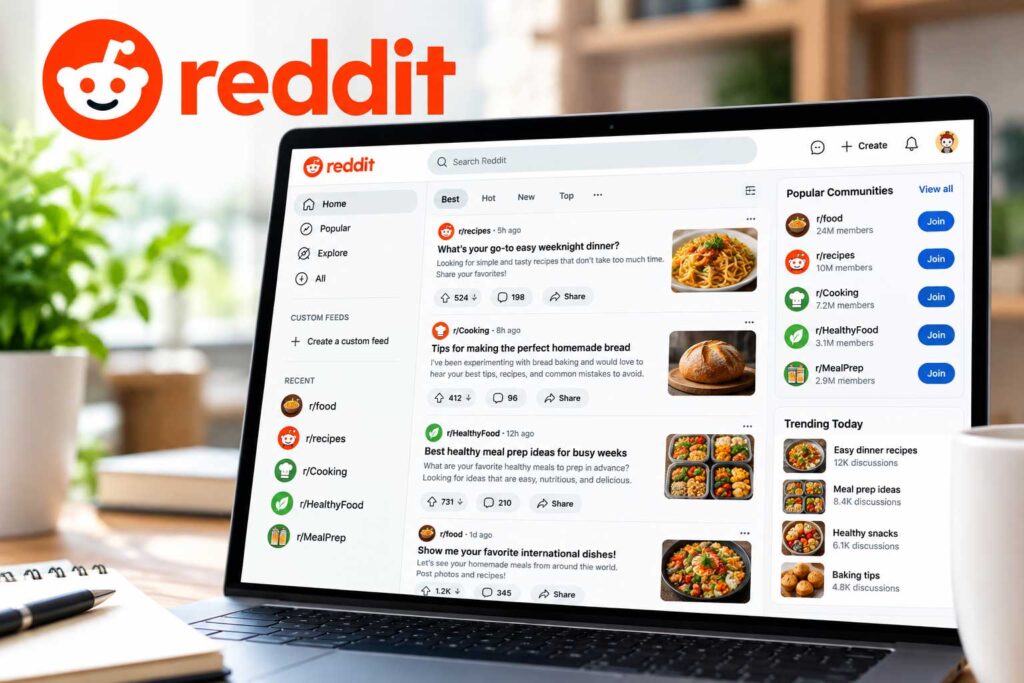
Reddit is one of the best places to see what real people are discussing, struggling with, recommending, and questioning.
Unlike a keyword tool, Reddit gives you access to actual conversations. That can help you understand the context behind a search instead of only seeing a phrase and a search-volume number.
For food bloggers, relevant discussions can appear around cooking, baking, meal prep, grilling, slow cooking, cast iron, budget meals, vegetarian food, specific diets, and kitchen equipment.
The most useful opportunities often come from repeated questions.
If people keep asking why homemade bread turns out dense, why air fryer chicken becomes dry, or how to meal prep without eating the same meal every day, those conversations can point to real content gaps.
Reddit Is Especially Useful for Finding Pain Points
Search engines can show you what people are searching for, while Reddit can help you understand why they are searching for it.
When you understand the frustration behind a question, you can create content that solves the actual problem instead of writing an article that simply includes the right keyword.
Reddit can also help you notice the exact language people use when describing a problem. That language can help you write clearer headings, FAQs, and introductions because you are answering the problem in the same terms your readers use.
The goal is not to copy Reddit threads or use individual comments as content. Treat the platform as a research source for discovering recurring problems, questions, and discussion patterns worth investigating further.
Website: Reddit

8. Flipboard
Flipboard can be useful for discovering articles, stories, and ideas around topics you already care about.
Instead of focusing on search-volume data, the platform lets you follow interests and curated Magazines so you can build a personalized feed around subjects such as food, cooking, restaurants, nutrition, travel food, kitchen design, sustainability, and food-industry news.
For food bloggers, that makes Flipboard more useful for broad inspiration than for traditional keyword research.
You may notice a new ingredient appearing across several publications, a cooking technique becoming more common, or a restaurant trend beginning to influence home cooking. Those patterns can sometimes lead to strong content ideas before they show up clearly in standard keyword tools.
Best Way to Use Flipboard
Flipboard becomes most useful when you notice the same ingredient, food trend, kitchen product, or consumer behavior appearing across several publications. When that happens, the topic may be worth a closer look.
You can then check Google Trends, Pinterest Trends, your keyword research tools, or Search Console before deciding whether it belongs in your content plan.
Website: Flipboard
9. Buffer
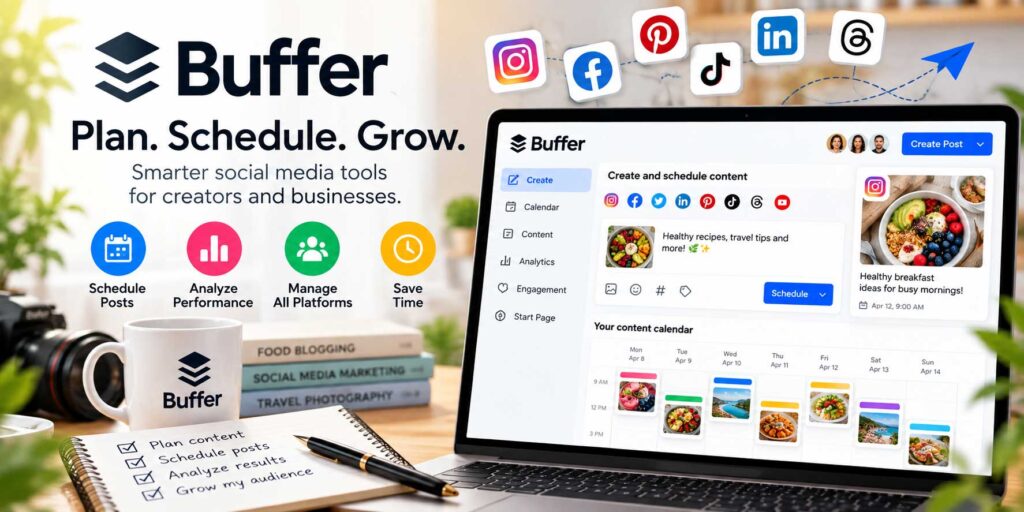
Buffer is best known as a social media scheduling platform, but it can also help food bloggers organize and develop ideas they discover during the research process.
Its Create workspace lets you save text, links, images, videos, and other materials as ideas that can later be turned into social posts. Buffer also supports content feeds from RSS sources, which can make it easier to keep track of useful inspiration from websites you follow.
Buffer’s AI features can also help brainstorm social content around a particular topic, audience, or campaign.
How Buffer Fits Into Content Discovery
Buffer is most useful after you have already found an idea somewhere else.
For example, you might notice a recipe trend in Pinterest Trends, uncover related questions with AnswerThePublic, and then save several social angles inside Buffer for later use.
In other words, Buffer is most useful for organizing and developing ideas after you discover them elsewhere.
For food bloggers managing several social platforms, this can be especially useful because one strong content idea can be developed into multiple formats, such as a Pinterest Pin, Instagram caption, Facebook post, or short promotional update.
Once you have the content ready, our guide to 30 ways to get traffic to your food blog covers additional ways to promote it.
Website: Buffer
10. Your Own Google Search Console Data
One of the most valuable content discovery tools is data from your own website.
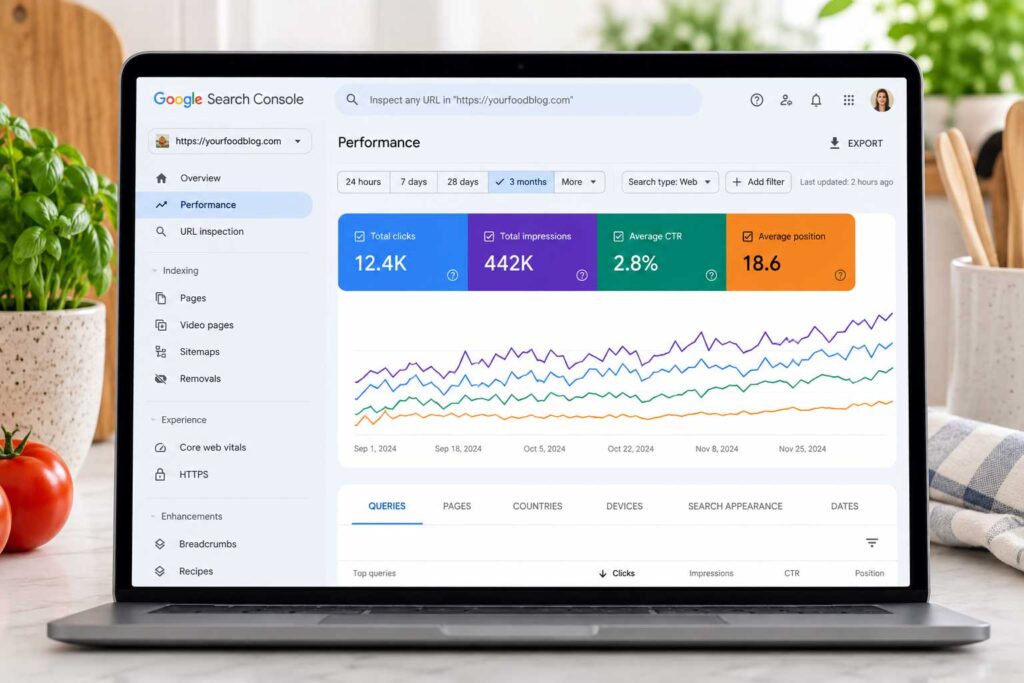
Google Search Console shows the search queries that are already generating impressions and clicks for your pages. That can reveal topics Google associates with your site even when you never intentionally targeted those exact phrases.
For example, suppose a strawberry smoothie article begins receiving impressions for strawberry smoothie without yogurt.
If your current post barely addresses that variation, the query may reveal a useful opportunity. You could expand the existing article, create a separate recipe, add a relevant FAQ, develop supporting content, or create a Pinterest Pin around the topic.
Why Search Console Data Is So Valuable
The biggest advantage is that this information comes from your own search visibility.
Instead of researching a completely new topic from scratch, you are looking at searches where your content is already appearing in Google. Those opportunities can be especially valuable because your site is already appearing for related searches.
As your food blog grows, Search Console can become even more useful for content planning. You may start finding recipe variations, ingredient substitutions, cooking questions, comparisons, and long-tail searches that deserve more attention.
The key is to look beyond your highest-click keywords. Queries with strong impressions but relatively few clicks can sometimes reveal content gaps, weak sections, or related topics worth developing further.
Used regularly, Google Search Console can become one of your best sources for discovering what to update next and what new content your audience may already be looking for.
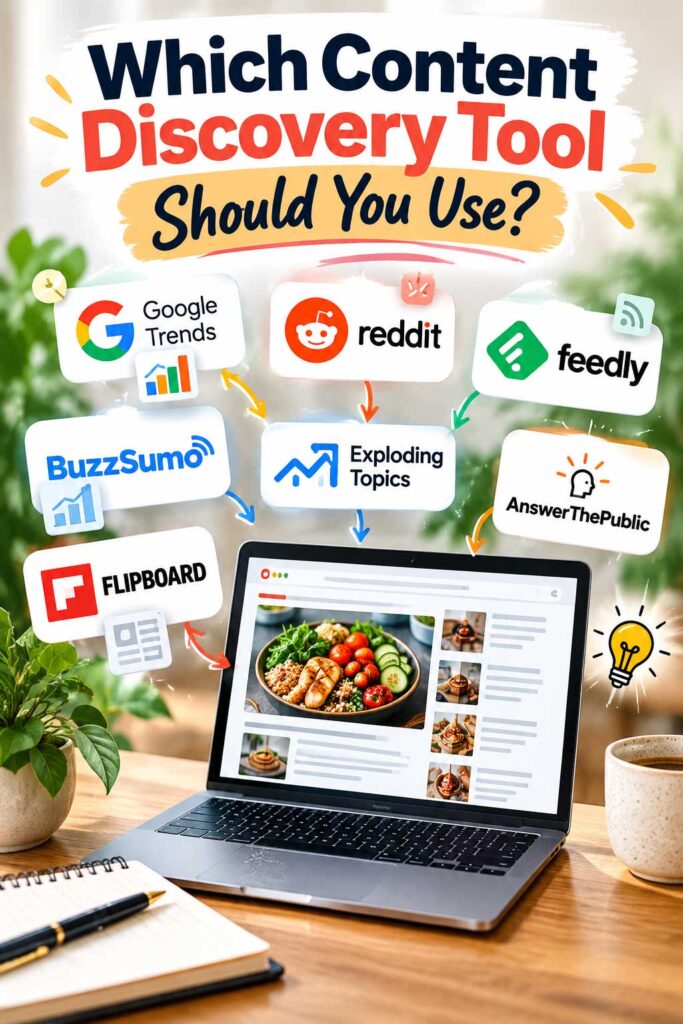
Which Content Discovery Tool Should You Use?
You do not need to subscribe to ten different platforms to build a strong content discovery process.
For most food bloggers, the best approach is to combine a few tools that serve different purposes.
You might use Google Trends to check seasonality, Pinterest Trends to spot recipe and visual trends, and AnswerThePublic to uncover questions and long-tail content ideas. Reddit can help you understand real problems and conversations, while BuzzSumo is useful for studying successful content and competitor topics.
If you want broader industry awareness, Feedly or Flipboard can help you follow publishers and food-related news. Exploding Topics is more useful for identifying emerging trends, while Google Search Console can reveal opportunities that are already appearing in your own search data.
The goal is not to use every tool every time. A smaller combination of complementary tools usually gives you a clearer picture than relying heavily on a single source.
For many food bloggers, a simple setup using Google Trends, Pinterest Trends, Google Search Console, and one additional research tool is more than enough. You do not need dozens of content discovery tools for food bloggers to build a steady pipeline of useful ideas.
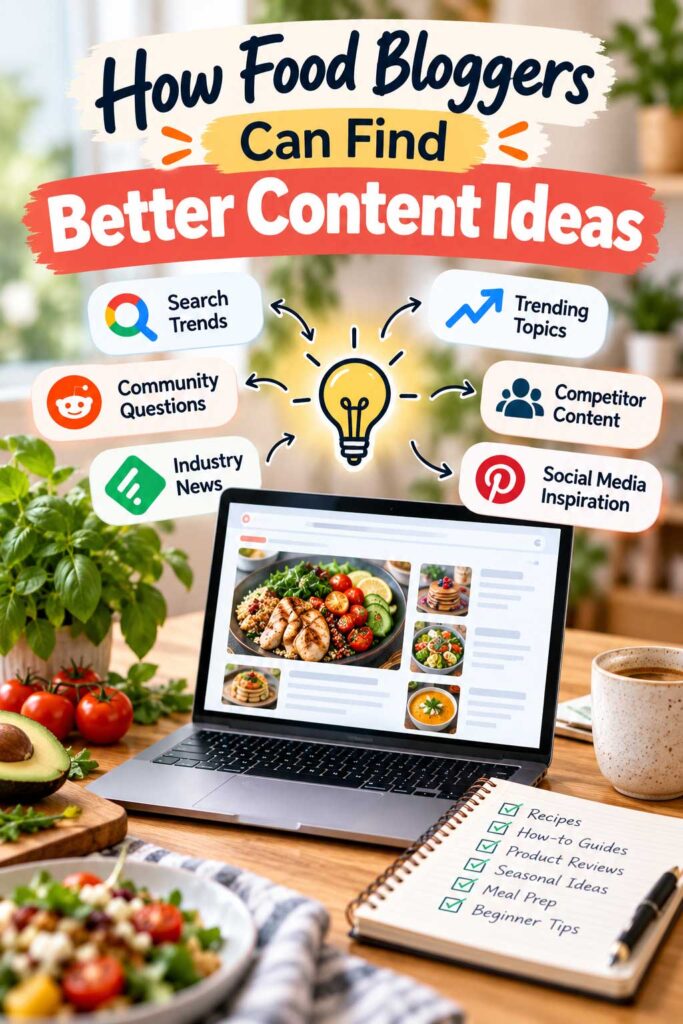
How Food Bloggers Can Find Better Content Ideas
The goal is not simply to find something that is trending.
A strong content idea usually works because your audience is interested in it, it fits naturally within your food niche, and you can create something genuinely useful around it.
For example, suppose you notice growing interest in high-protein breakfasts.
Google Trends may confirm that interest is increasing, while Pinterest Trends may reveal which recipe variations are gaining attention. AnswerThePublic can show the questions people are asking about ingredients, protein amounts, or preparation, and Reddit may reveal common frustrations around taste, texture, cost, or meal prep.
When several of those signals point in the same direction, you may have the beginnings of an entire content cluster.
A broader topic such as high-protein breakfasts could lead to content about high-protein overnight oats, protein pancakes, high-protein smoothies, make-ahead breakfasts, meal-prep ideas, or breakfast recipes without eggs.
That is where content discovery becomes especially valuable.
Instead of chasing isolated topics, you can use one promising trend to build a connected group of articles that support each other and cover the subject in more depth.
One strong discovery can sometimes produce weeks or even months of useful content.
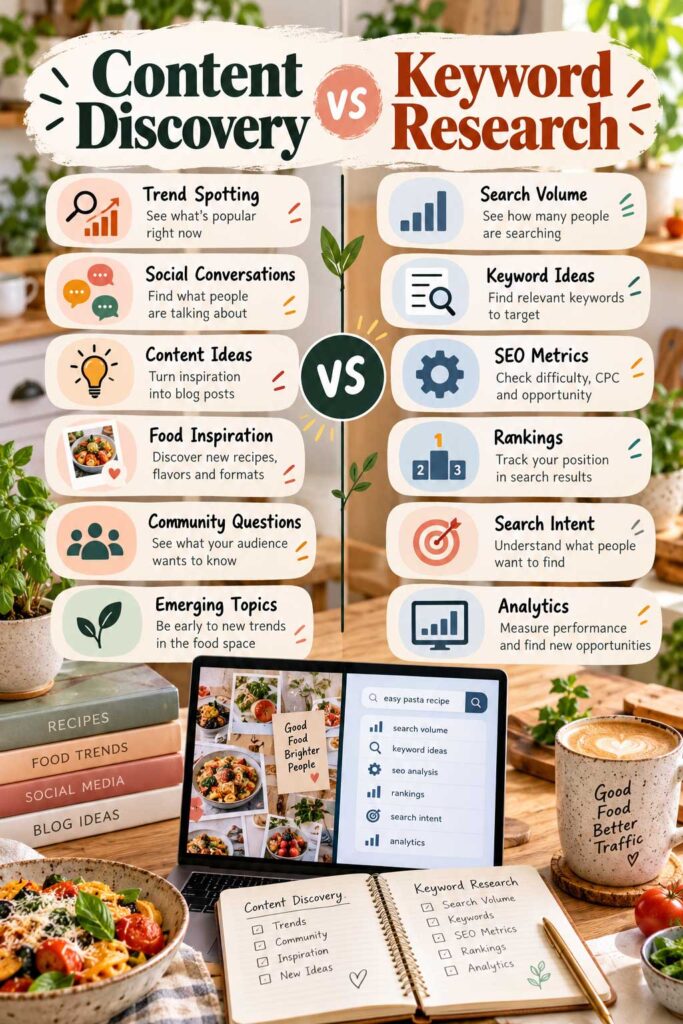
Content Discovery vs Keyword Research
Content discovery and keyword research overlap, but they are not the same thing.
Keyword research is usually more focused on search behavior and SEO metrics such as search volume, search intent, keyword difficulty, competition, and related terms. Its main purpose is to help you understand how people search and how realistic it may be to rank for a topic.
Content discovery takes a broader view.
It can include search trends, social conversations, audience questions, industry news, viral topics, new products, seasonal interests, and emerging behaviors that may not yet have strong search-volume data.
Food bloggers should ideally use both approaches together.
A topic may look promising on Pinterest or Reddit, but keyword research can help you determine whether there is also meaningful search demand behind it. On the other hand, a keyword may have attractive search volume but still make a poor content idea if it does not fit your audience or offer much room for useful, engaging content.
Used together, content discovery and keyword research can show you what people care about, what they search for, and which ideas are actually worth pursuing.
If SEO is a major part of your strategy, start with our guide to the best free keyword research tools for food bloggers and use content discovery tools alongside that research.
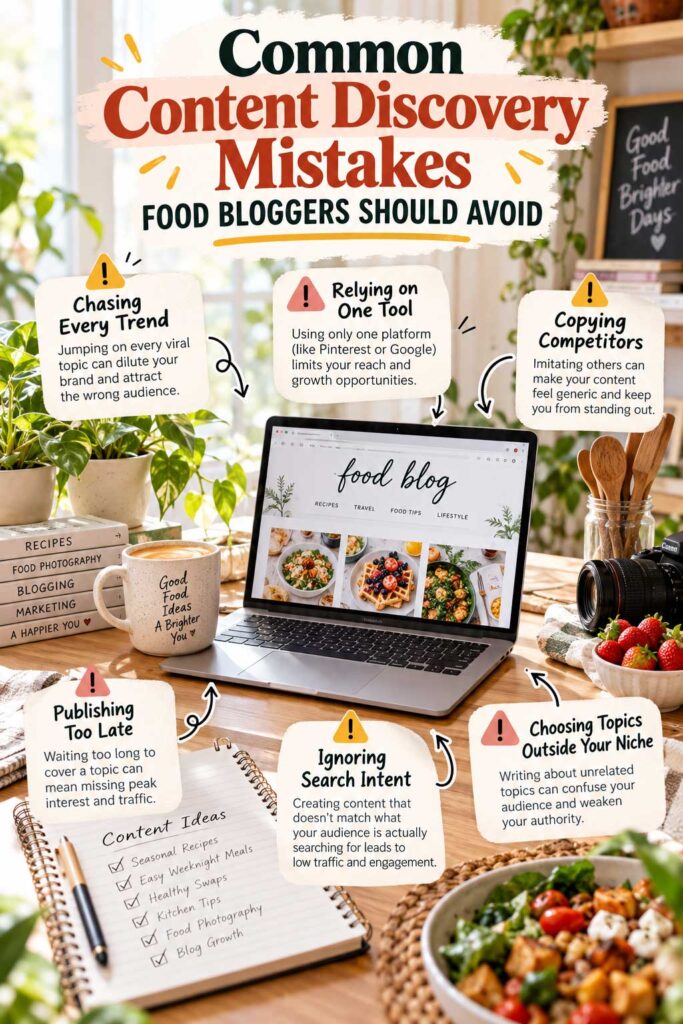
Common Content Discovery Mistakes Food Bloggers Should Avoid
Content discovery tools for food bloggers can uncover a lot of promising ideas, but they can also create noise if you use them without a clear strategy.
Chasing Every Trend
One common mistake is chasing every trend you see.
A topic may be growing quickly, but that does not mean it belongs on your blog. If the idea does not fit your niche, audience, or existing content, publishing it just because it is popular can make your site feel scattered.
Relying on Only One Source
Another mistake is relying on a single platform or data source.
Pinterest may show strong interest around a recipe while Google search demand is weak. Reddit may reveal a real problem, but the topic may be too narrow to support a full article.
Checking the idea in a few different places gives you a much better sense of whether it is actually worth pursuing.
Copying Competitors Too Closely
Competitor research is useful for spotting patterns and content gaps, but the goal is not to recreate the same article with slightly different wording.
Look for ways to add a stronger recipe, clearer instructions, better photos, a different angle, or more useful supporting information.
Publishing Seasonal Content Too Late
Timing is another easy mistake to make.
Seasonal content often performs best when it is published or refreshed before demand peaks. Waiting until everyone is already searching for Christmas cookies, grilling recipes, or pumpkin desserts can mean missing part of the opportunity.
Confusing Popularity With Usefulness
A topic can be trending and still make a poor article if it does not solve a real problem or provide enough value.
A better topic is one your audience actually cares about and that you can cover in a useful, original way.
Collecting Ideas Without a Plan
Finally, avoid collecting endless ideas without turning them into action.
Finding ideas is only the first step. Keep the ones that fit your blog, organize them by priority and season, and turn the best opportunities into actual posts on your content calendar.
FAQs About Content Discovery Tools for Food Bloggers
What Are the Best Content Discovery Tools for Food Bloggers?
Some of the best content discovery tools for food bloggers include Google Trends, Pinterest Trends, AnswerThePublic, BuzzSumo, Feedly, Reddit, Exploding Topics, Flipboard, Buffer, and Google Search Console.
The best choice depends on what you are trying to discover. Google Trends is useful for seasonality, Pinterest Trends for visual and recipe trends, Reddit for audience pain points, and Search Console for opportunities already connected to your own website.
Are Content Discovery Tools the Same as Keyword Research Tools?
Not exactly.
Keyword research tools focus more heavily on search volume, competition, keyword difficulty, intent, and related queries. Content discovery tools take a broader approach and can uncover social conversations, emerging trends, seasonal topics, audience questions, and industry developments.
Food bloggers usually get better results when they use both together.
What Is the Best Free Content Discovery Tool for Food Bloggers?
Google Trends is one of the best free options because it helps you compare topics, understand seasonality, and see how interest changes over time.
Pinterest Trends and Google Search Console are also extremely useful free tools, especially for bloggers who already receive traffic from Pinterest or Google.
How Do Food Bloggers Find Trending Recipe Ideas?
A good starting point is to compare signals from several sources.
Google Trends can show whether interest is increasing, Pinterest Trends can reveal seasonal and visual search behavior, while Reddit and AnswerThePublic can uncover questions and problems people are actively discussing.
When several tools point toward the same topic, it may be worth researching further.
How Often Should Food Bloggers Research New Content Ideas?
You do not need to research new ideas every day.
For most food bloggers, reviewing trends and content opportunities once or twice a month is usually enough to keep your content calendar filled with useful ideas. Seasonal sites may benefit from planning further ahead so recipes can be published before search and Pinterest demand reaches its peak.
Can Content Discovery Tools Help With Pinterest Ideas?
Yes. Pinterest Trends is particularly useful for discovering seasonal recipes, visual trends, and topics that Pinterest users are beginning to search for.
Other tools such as Google Trends, AnswerThePublic, and Reddit can also help you find angles that can later be turned into Pinterest Pins.
Can Google Search Console Be Used for Content Discovery?
Yes.
Google Search Console can reveal queries for which your website is already receiving impressions, even when you did not intentionally target those terms.
Those queries can help you identify new recipe variations, FAQs, supporting articles, and opportunities to improve existing content.
Do I Need Paid Content Discovery Tools?
No.
You can build a very effective research workflow without paying for multiple content discovery tools for food bloggers. Free options such as Google Trends, Pinterest Trends, Reddit, and Google Search Console are enough for many sites.
Paid tools such as BuzzSumo can provide deeper competitive and content-performance data, but they are not essential for getting started.
Final Thoughts on Content Discovery Tools for Food Bloggers
Running out of food blog ideas is rarely the real problem.
The bigger challenge is sorting through all the noise and figuring out which ideas are actually worth your time.
Tools such as Google Trends, Pinterest Trends, BuzzSumo, AnswerThePublic, Feedly, Exploding Topics, Reddit, Flipboard, Buffer, and Google Search Console can make that process much easier.
Good ideas still need a strong website behind them, so new bloggers may also want to compare the best blogging platforms for food bloggers.
You do not need to use all of them.
For most food bloggers, a simple combination of Google Trends, Pinterest Trends, AnswerThePublic, and Google Search Console can already provide a strong content discovery system.
The real advantage comes from what you do next: turning those discoveries into better recipes, stronger articles, useful supporting content, and ideas that genuinely serve your audience.
More Resources for Growing Your Food Blog
Content discovery works best when it connects with keyword research, SEO, promotion, and the right blogging tools. If you are planning your next round of content, these guides can help you turn new ideas into stronger posts and more traffic.
Best Free Keyword Research Tools for Food Bloggers explains how to validate ideas, uncover search demand, and find keywords worth targeting before you start writing.
Best Tools for Food Bloggers covers useful tools for SEO, content creation, email marketing, design, productivity, analytics, and running a food blog more efficiently.
Best Blogging Platforms for Food Bloggers compares popular free and paid platforms and explains which options make the most sense for bloggers who want to grow and monetize their sites.
30 Ways to Get Traffic to Your Food Blog shows how to promote the content you create through SEO, Pinterest, social media, email, and other traffic sources.
Common Food Blogging Mistakes to Avoid can help you avoid problems that slow down traffic growth, content quality, SEO, and monetization.